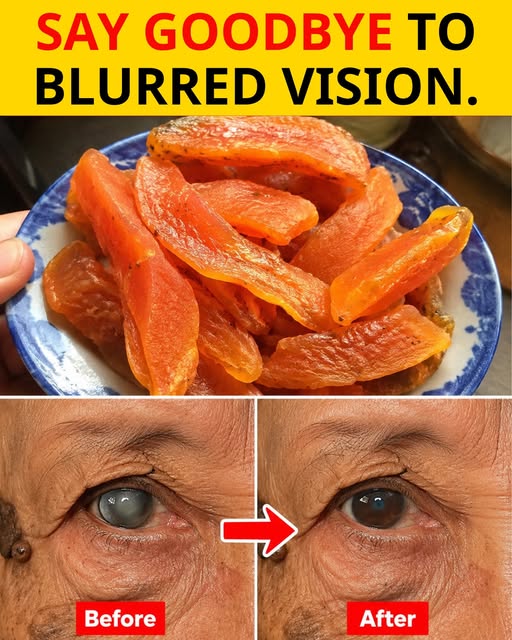
Papaya doesn’t just sit there looking harmless on a counter. It floods aging eyes with raw biological fuel that helps blunt the slow grind behind blurry vision, dry scratchy mornings, and the clouded lens problem people call cataracts.
That foggy, waxy feeling in the morning? That’s not “just age.” That’s the eye’s delicate machinery getting battered by oxidative stress, a thinning tear film, and a lens that’s been taking hits like a windshield in a hailstorm.
You rub your eyes, blink hard, and the room still looks smeared at the edges. By afternoon, headlights split into glowing spikes, menus blur into a gray wall, and every bright light feels like it punches straight through your skull.

What the eye-care industry rarely says loud enough is this: your body already has the blueprint for repair, but it gets starved of the compounds that keep the retina, cornea, and lens running clean. Papaya steps into that gap and changes the chemistry fast.
The Clear-Signal Reset Inside Your Eyes
Call it the Clear-Signal Reset. Papaya brings in vitamin C, vitamin A, vitamin E, and folate — a stack that acts like molecular brooms sweeping out the debris that fogs vision and stresses the lens.
Think of the eye like a camera left out in a dusty garage. The lens should stay clear, the retina should catch light cleanly, and the surface should stay slick enough to keep every blink smooth; when that system dries out and oxidizes, the picture starts to smear.

That’s why papaya matters so much for people dealing with cataract buildup and that tired, gritty, end-of-day eye strain. It doesn’t just “support” anything in a vague, meaningless way — it forces a cleaner internal environment that helps the eye defend itself instead of constantly playing catch-up.
Recent Articles

Waking Up With a Dry Mouth Every Night? Here Are 8 Common Reasons Why

20 Early Signs Your Body is Fighting Cance

Doctors Issue Urgent Warning: Stop Eating These 4 Everyday Foods Immediately Before They Destroy Your Body From the Inside Out!